
SpaceX IPO Watch: The Most Hyped Listing on Earth — and Maybe Beyond
SpaceX may be the kind of IPO that lights up every watchlist. But hype is not a trade plan. Here’s what traders should watch, what the market is excited about, and where the risk lives.
Body
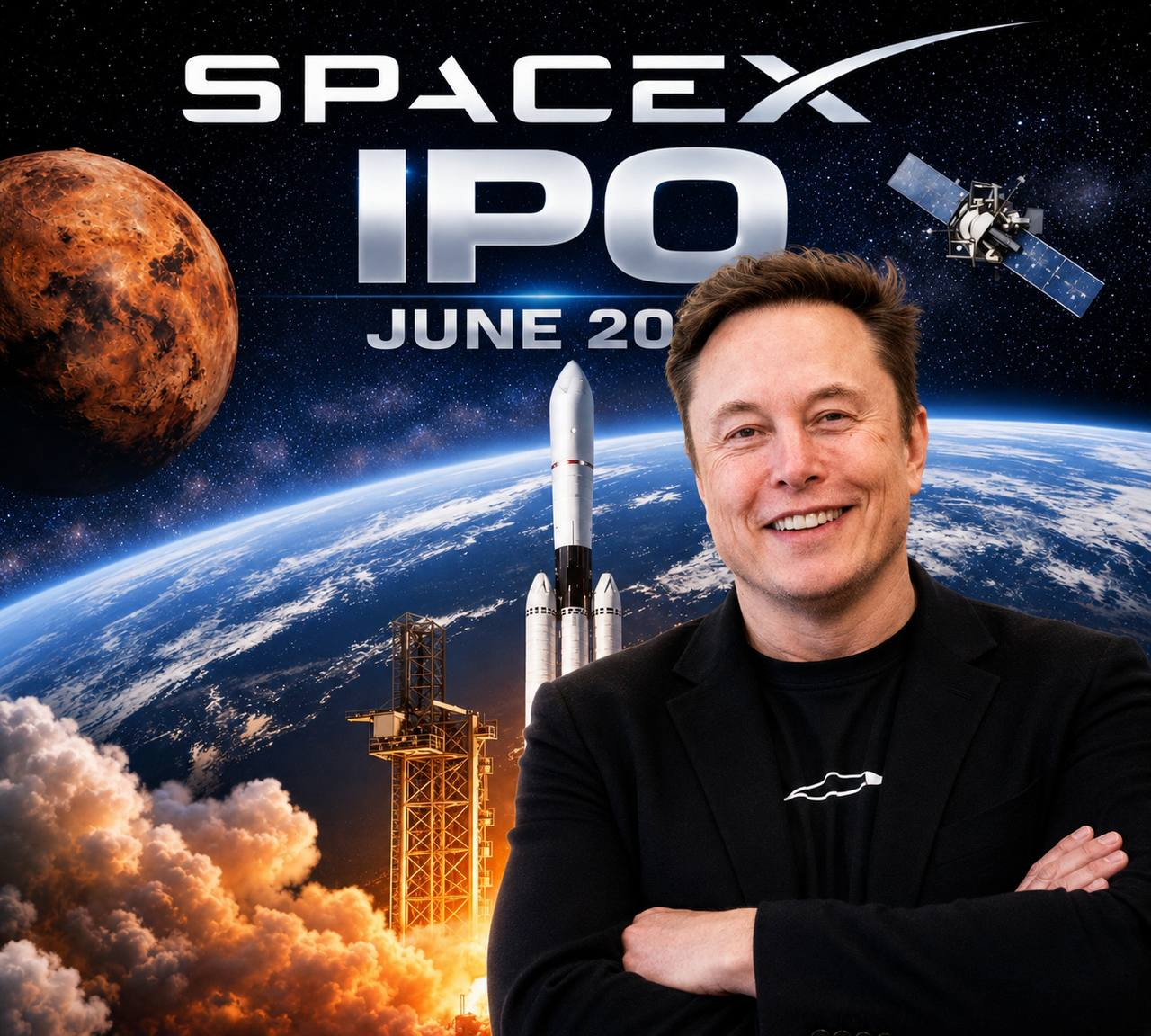
If there is one IPO that can pull space nerds, Tesla bulls, growth investors, momentum traders, and mainstream media into the same ticker tape, it is SpaceX.
The current wave of coverage has all the ingredients of a market spectacle: rockets, Starlink satellites, artificial intelligence ambitions, Elon Musk’s control premium, retail investor demand, and the possibility of one of the most watched public listings in modern market history. Headlines from CNBC, Reuters, BBC, Bloomberg, Morningstar, TechCrunch, NPR, and others are all circling the same core idea: SpaceX is no longer just a private-market legend. It is becoming a public-market story.
That matters for active traders because the first public sessions after a high-profile IPO can become a pure sentiment arena. Narrative, liquidity, options speculation, media clips, social chatter, and valuation debates can all collide at once.
But let’s be clear from the start: hype is not a trade plan.
Why the SpaceX IPO has traders fired up
SpaceX is not a normal IPO candidate. The company sits at the intersection of multiple mega-themes that public markets already love:
- Commercial space infrastructure
- Satellite broadband through Starlink
- Reusable rockets and launch economics
- Starship and deep-space ambition
- Defense, government, and national infrastructure relevance
- AI-adjacent growth narratives
- Elon Musk’s founder premium
That combination creates a rare kind of market magnet. Traders do not just see a company; they see a story that can move.
Recent coverage suggests investors are focused on two major engines: SpaceX’s launch dominance and Starlink’s role as a potential financial backbone. Broadband Breakfast framed Starlink as the business “paying the bills,” while Reuters and TechCrunch highlighted the company’s future bets around AI, Starship, and Musk’s central role.
For momentum traders, that is the exact kind of story that can produce early volatility.
The Elon Musk angle: retail wants a seat
One of the most interesting references around the IPO conversation comes from Elon Musk’s own past X activity. In a 2020 post indexed by Google News, Musk wrote about a possible Starlink IPO, saying:
“We will probably IPO Starlink, but only several years in the future when revenue growth is smooth & predictable. Public market does not like erratic cash flow haha. I’m a huge fan of small retail investors. Will make sure they get top priority.”
That post was about Starlink specifically, not necessarily the full SpaceX parent company. But it still matters because today’s SpaceX IPO narrative keeps circling back to Starlink as a major driver of the story.
The key phrase for traders is not just “IPO.” It is “smooth & predictable.” Public markets reward growth, but they punish uncertainty. If SpaceX comes public with a valuation that already assumes flawless execution, then even small disappointments can matter.
The bullish case traders will focus on
The bull case is easy to understand:
SpaceX has built one of the most recognizable private companies on the planet. It launches rockets, runs a satellite internet network, supports government and commercial missions, and has a founder who can generate global attention with a single post.
If the IPO opens with strong demand, traders may watch for:
- Clean opening range breakouts
- High relative volume
- Institutional accumulation after the first volatility flush
- Strong VWAP reclaim setups
- Dip-buying around key intraday support
- Sympathy moves in space, satellite, defense, and launch-related names
A major IPO like this can also create second-order opportunities. Sometimes the cleanest trades are not in the IPO itself, but in related public names that catch sympathy volume with cleaner technical levels.
The risk: this can be exciting and dangerous at the same time
The same ingredients that make this IPO exciting also make it risky.
Reuters and CNBC coverage have pointed to losses, heavy spending, and Musk’s large ownership/control profile. NPR described blockbuster spending on rockets and AI. Barron’s and Morningstar have also raised valuation and financial-analysis angles.
That does not mean the IPO is bad. It means traders need to separate company quality from trade quality.
A great company can be a terrible entry if the price is wrong.
A historic IPO can still gap up, trap late buyers, break VWAP, and trend lower for days.
A powerful narrative can still produce brutal intraday reversals.
The biggest risks to respect:
- Valuation risk: Public buyers may be asked to pay for years of future execution upfront.
- Volatility risk: Opening prints can be disorderly and spreads can be wide.
- FOMO risk: Retail attention can push traders into emotional entries.
- Governance risk: Musk’s control and key-person premium may cut both ways.
- Execution risk: Rockets, satellites, Starship, AI, regulation, and capital intensity are not low-risk businesses.
- Lockup risk: Future insider/shareholder selling can affect supply.
MeliorEdge trading framework for a mega-IPO
If SpaceX starts trading, the right mindset is simple:
Do not predict. Prepare.
For active traders, that means building a plan before the opening bell:
- Define max loss before entering. If you do not know the exit, you do not have a trade.
- Wait for structure. Let the opening range form. Avoid chasing the first emotional candle.
- Respect VWAP. Mega-IPO strength above VWAP and weakness below VWAP can tell you where institutions are leaning.
- Size smaller than normal. New IPOs can move fast and slip hard.
- Track volume quality. Big volume is not automatically bullish. Watch whether volume confirms higher lows or distributes into pops.
- Journal the setup. Record your thesis, entry, stop, and emotional state. IPO hype is exactly where discipline gets tested.
Final take
The SpaceX IPO could become one of the biggest market events of the year. The story is powerful: reusable rockets, Starlink cash flow, AI ambition, Starship dreams, and Elon Musk at the center of it all.
That is why traders should watch it closely.
But watching closely is not the same as chasing blindly.
The best traders will treat the SpaceX IPO as a high-attention, high-volatility opportunity — not a guaranteed moonshot. Let the chart confirm the story. Let the risk plan control the emotion. And if the trade is not clean, there will always be another launch window.
Trading reminder: IPOs and momentum stocks are risky. Prices can move sharply against you, especially during opening volatility. Nothing here is financial advice. Always manage risk, use stops, and never trade money you cannot afford to lose.